Publishing Your Research in English-Language Academic Journals
July 13, 15, 17, 2026 (3 Days)
9:00 am - 11:00 am (Mexico Central Time; U.S. Mountain Time)
Three 2-hour live, online modules delivered over three alternating days, professionally facilitated by experts for a total of six hours of synchronous instruction with opportunities to interact with speakers and fellow attendees. The modules are supplemented with independent assignments that allow participants to focus on clarification, application and extension of core ideas at their own pace.
Cost
$375 USD per person (early bird registration by June 15)
$425 USD per person (registration June 16 – July 6)
Description
This course is designed for scholars seeking to publish original quantitative or qualitative research in English-language academic journals. The course is taught in English, and participants should therefore have at least a basic command of spoken and written English to engage fully with course materials and discussion. Rather than focusing narrowly on grammar or translation, the course introduces participants to the underlying expectations, structures, and evaluative criteria that shape academic publishing in English. Many scholars encounter barriers not because of the quality of their research, but because the conventions of international publishing—particularly in Anglophone contexts—are often implicit, unevenly taught, and difficult to access from outside these systems. Drawing on experience in academic writing instruction and manuscript evaluation, this course will help faculty, advanced doctoral students and postdocsapproach publication as a process of navigation: understanding how journals operate, how arguments are constructed and assessed, and how scholars position their work for international audiences.
Learning Objectives
In addition to enriching their academic toolkit and improving their scholarly impact, participants will:
Course Content
Module 1. Argumentation and Claims-Making Monday, July 13, 9:00am – 11:00am US Mountain/Mexico Central Time Participants will learn how to construct clear, persuasive central claims that meet the expectations of international journals. This includes distinguishing between description and argument, developing a central claim, and ensuring that each section of a manuscript contributes to a coherent scholarly intervention. Participants will have the opportunity to both give and receive peer feedback on their central claim. Module 2. Writing Effective Abstracts Wednesday, July 15, 9:00am – 11:00am US Mountain/Mexico Central Time The abstract is often the most important—and most misunderstood—component of a journal article. This module focuses on how to write concise, high-impact abstracts that clearly communicate the article’s contribution, methodology, and significance, and that align with how editors and reviewers initially assess submissions. Featuring a guest speaker segment with Dr. Julianne Newmark, Director of Technical & Professional Communication at The University of New Mexico and Editor-in-Chief of Xchanges, a Writing Studies ejournal. Module 3. Selecting Appropriate Journals Friday, July 17, 9:00am – 11:00am US Mountain/Mexico Central Time Choosing where to submit is a strategic decision that significantly affects publication outcomes. Participants will learn how to identify appropriate journals based on scope, audience, and scholarly positioning; how to interpret journal guidelines; and how to evaluate fit beyond metrics such as impact factor. Featuring an interactive discussion with Dr. Stephanie Beene, Graduate and Faculty Engagement Librarian within the College of Fine Arts and the School of Architecture and Planning at The University of New Mexico.
Facilitator & Guest Speakers
Facilitator
Guest Speakers
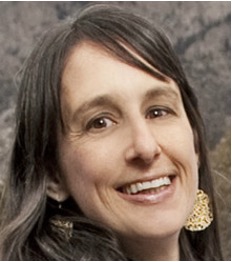 Dr. Julianne Newmark teaches Technical & Professional Communication (TPC) and serves as the Director of Technical & Professional Communication and Assistant Chair for Core Writing at The University of New Mexico. During 2024-2025, she was a Fulbright-Tampere University Scholar, supported by the Fulbright Finland Foundation. Her research interests concern the school-to-work transition, multimodal community-creation in online classrooms, and usability/user-centered design. She also publishes, teaches, and conducts research in an area of Indigenous Studies that concerns early-twentieth-century Native activist writers’ rhetorically impactful navigations of bureaucratic writing conventions, particularly in Bureau of Indian Affairs contexts. Newmark received a two-year 2017 CCCC/NCTE Emergent Research Grant for her book project "Reports of Agency: Retrieving Indigenous Professional Communication in Dawes Era Indian Bureau Documents.” Her 2015 book The Pluralist Imagination from East to West in American Literature was published by University of Nebraska Press. Newmark is also the Editor-in-Chief of Xchanges, a Writing Studies ejournal.
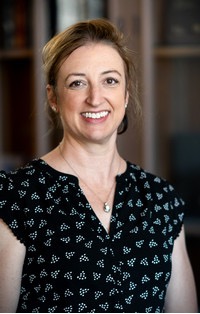 As a Graduate and Faculty Engagement Librarian, Dr. Stephanie Beene supports the teaching, learning, and research of graduate students and faculty within the College of Fine Arts and the School of Architecture and Planning at The University of New Mexico. She participates in numerous collaborative outreach initiatives, such as a recent workshop in conjunction with the Faculty Research & Development Office on demystifying book publishing for faculty members and graduate students. In her dual role as a published author and liaison for students, faculty, and staff, she frequently navigates questions about the academic publishing processand is well-versed insearching forsuitable outlets for disseminating research.